
Boost your business with professional brand identity design services. Create a memorable brand, build trust, and grow faster. Call 9315781670 today.
Table of Contents
Introduction
In today’s highly competitive business landscape, having a great product or service is no longer enough to stand out. Customers are constantly exposed to countless brands every day, making it essential for businesses to create a strong and memorable identity. This is where brand identity design plays a crucial role.
A well-crafted brand identity helps businesses communicate their values, establish trust, and create a lasting impression on customers. Whether you are a startup, small business, or established enterprise, investing in professional brand identity design can significantly impact your growth and market position.
Brand identity goes beyond just a logo. It encompasses visual elements, brand messaging, color schemes, typography, packaging, and customer experiences that collectively shape how people perceive your business. A strong identity ensures consistency across all marketing channels and helps create meaningful connections with your target audience.
If you’re looking for professional branding solutions, expert guidance, and creative strategies, call 9315781670 today to transform your business into a memorable and recognizable brand{1}.
What Is Brand Identity Design?
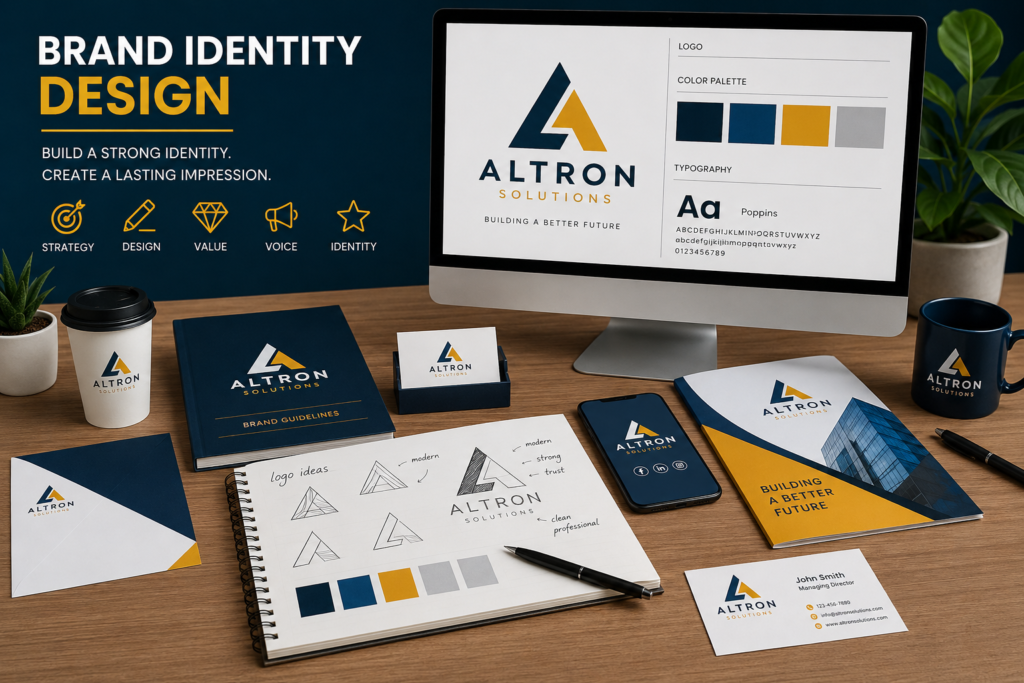
Brand identity design refers to the visual and strategic representation of a company that communicates its personality, values, mission, and unique characteristics. It serves as the face of your business and helps customers instantly recognize your brand.
A complete brand identity includes
- Logo Design
- Brand Colors
- Typography
- Brand Voice
- Business Cards
- Packaging Design
- Website Design
- Social Media Graphics
- Marketing Materials
- Brand Guidelines
When these elements work together harmoniously, they create a cohesive and professional image that customers can trust.
Why Brand Identity Design Matters for Business Growth
Many business owners underestimate the power of professional branding. However, studies consistently show that businesses with strong branding enjoy higher customer trust, improved recognition, and increased revenue.
Builds Trust and Credibility
Customers tend to trust brands that appear professional and consistent. A polished identity signals reliability and competence.
When your website, social media profiles, brochures, and packaging all share the same visual style, customers feel more confident in your business.
Enhances Brand Recognition
Think about some of the world’s most successful companies. Their visual identities are instantly recognizable.
Effective brand identity design ensures customers remember your business whenever they see your logo, colors, or marketing materials.
Creates Emotional Connections
People often make purchasing decisions based on emotions. Strong branding helps establish an emotional bond between your business and customers.
A memorable brand story combined with appealing visuals can inspire loyalty and encourage repeat purchases.
Supports Marketing Efforts
Marketing becomes more effective when supported by a consistent brand identity.
Every advertisement, social media campaign, and promotional activity becomes more impactful because customers already recognize and trust your brand.
Core Elements of Professional Brand Identity Design
Creating a powerful brand requires multiple components working together.
Logo Design
The logo is often the first thing customers notice about your business.
A professionally designed logo should be
- Memorable
- Scalable
- Unique
- Relevant
- Timeless
An effective logo becomes the foundation of your entire branding strategy.
Color Palette
Colors influence emotions and perceptions.
Different colors communicate different messages
| Color | Common Association |
|---|---|
| Blue | Trust, Reliability |
| Red | Energy, Passion |
| Green | Growth, Nature |
| Black | Luxury, Sophistication |
| Yellow | Optimism, Creativity |
Selecting the right color palette is a critical part of brand identity design.
Typography
Fonts play a major role in communicating brand personality.
For example:
| Font Type | Brand Impression |
| Serif | Traditional |
| Sans Serif | Modern |
| Script | Elegant |
| Display | Creative |
Consistent typography helps maintain professionalism across all communication channels.
Visual Style
Visual elements include
- Icons
- Patterns
- Illustrations
- Photography Style
- Graphic Treatments
These components strengthen brand recognition and ensure consistency.
Understanding the Difference Between Branding and Brand Identity
Many people use these terms interchangeably, but they are different{2}.
Branding
Branding refers to the overall perception customers have about your business.
It includes
- Reputation
- Customer Experience
- Company Values
- Messaging
- Emotional Impact
Brand Identity
Brand identity design focuses specifically on the visual and tangible aspects that represent your brand.
It includes
- Logo
- Colors
- Fonts
- Design System
- Marketing Assets
Simply put:
Brand Identity = What Customers See
Branding = What Customers Feel
The Brand Identity Design Process
Professional designers follow a structured process to create effective brand identities.
Discovery and Research
The first stage involves understanding
- Business Goals
- Industry Trends
- Competitors
- Target Audience
- Unique Selling Points
Research ensures the final identity aligns with market expectations and customer needs.
Brand Strategy Development
Before creating visuals, branding experts define
- Brand Mission
- Brand Vision
- Core Values
- Brand Personality
- Market Positioning
A strong strategy serves as the foundation for all design decisions.
Concept Creation
Designers create multiple concepts that reflect the brand’s personality and objectives.
Concept development often includes
- Mood Boards
- Sketches
- Visual Exploration
- Style Directions
Design Refinement
Selected concepts undergo refinement until every detail aligns with the brand strategy.
This stage includes
- Logo Adjustments
- Color Refinement
- Typography Selection
- Layout Improvements
Brand Guidelines
Comprehensive guidelines ensure consistent implementation of the brand identity across all platforms.
These guidelines typically cover
- Logo Usage Rules
- Color Specifications
- Font Hierarchy
- Image Style
- Social Media Standards
How Brand Identity Design Impacts Customer Decisions
Customers form opinions within seconds of encountering a brand{3}.
Research indicates that visual appearance significantly influences buying decisions.
A strong brand identity design can
- Increase trust
- Improve credibility
- Enhance perceived value
- Strengthen customer loyalty
- Encourage referrals
Businesses with professional branding often command higher prices because customers perceive them as more valuable and trustworthy.
Signs Your Business Needs a Brand Identity Redesign
Many businesses operate with outdated branding for years without realizing its impact.
Common warning signs include
- Outdated Logo
- Inconsistent Marketing Materials
- Weak Brand Recognition
- Difficulty Attracting Customers
- Poor Online Presence
- Rebranding After Expansion
If any of these apply to your business, investing in modern brand identity design could significantly improve your market position.
Brand Identity Design for Startups
Startups face unique challenges when entering competitive markets.
Professional branding helps startups
- Build credibility quickly
- Attract investors
- Gain customer trust
- Create differentiation
- Support marketing campaigns
A strong identity can often determine whether a startup gets noticed or ignored.
Brand Identity Design for Small Businesses
Small businesses benefit immensely from strategic branding.
Advantages include
- Increased Local Recognition
- Better Customer Retention
- Professional Appearance
- Competitive Advantage
- Improved Marketing Results
Even businesses with limited budgets can achieve significant growth through effective branding.
How Brand Identity Design Creates a Competitive Advantage
In today’s crowded marketplace, businesses must work harder than ever to capture customer attention. Products and services can often be copied, but a unique brand identity is difficult for competitors to replicate. This is one of the main reasons why investing in professional brand identity design can provide a long-term competitive advantage.
A strong brand identity communicates professionalism, quality, and reliability. Customers naturally gravitate toward brands that appear trustworthy and consistent. When your logo, colors, typography, website, and marketing materials all align with your brand values, people remember your business more easily.
Businesses with a clear brand identity design often enjoy
- Higher customer trust
- Better customer retention
- Increased referrals
- Improved online engagement
- Stronger market positioning
The stronger your identity, the easier it becomes to differentiate your business from competitors and build a loyal customer base.
Digital Brand Identity Design for Modern Businesses
The digital world has transformed how customers interact with brands. Today, your online presence is often the first impression potential customers have of your business.
A modern brand identity design should include digital assets such as
- Website Design
- Social Media Branding
- Email Templates
- Digital Advertisements
- Mobile App Design
- Online Presentation Templates
Consistency across digital platforms is essential. Customers should instantly recognize your brand whether they visit your website, see your social media post, or receive your email newsletter.
A professionally designed digital identity creates a seamless experience that strengthens customer confidence and improves conversion rates.
Brand Identity Design and Customer Loyalty
Customer loyalty is one of the most valuable assets a business can possess. Loyal customers not only make repeat purchases but also recommend your business to others.
A strong brand identity design contributes to loyalty in several ways
Consistent Experiences
Customers appreciate consistency. When your branding remains uniform across every touchpoint, customers know what to expect.
Emotional Connection
Great brands connect emotionally with their audience. Through thoughtful design and messaging, businesses can create relationships that extend beyond products and services.
Brand Recognition
The more familiar customers become with your brand, the more likely they are to choose it over competitors.
Building loyalty takes time, but consistent branding accelerates the process by reinforcing trust and recognition.
Common Brand Identity Design Mistakes to Avoid
Many businesses unknowingly weaken their brand by making avoidable mistakes.
Using Too Many Colors
A cluttered color palette can confuse customers and reduce brand recognition.
Inconsistent Typography
Using different fonts across marketing materials creates an unprofessional appearance.
Following Trends Blindly
Design trends come and go. Your brand should focus on timeless elements that remain effective for years.
Weak Logo Design
An overly complicated logo can be difficult to remember and reproduce across different platforms.
Ignoring Brand Guidelines
Without clear guidelines, employees and marketing teams may create inconsistent materials that weaken your brand identity.
Avoiding these mistakes helps maintain a strong and professional brand image{4}.
The Role of Storytelling in Brand Identity Design
Storytelling has become an important part of modern branding. Customers want to know the people, values, and purpose behind a business.
A compelling brand story helps businesses
- Build emotional connections
- Create authenticity
- Increase customer engagement
- Differentiate from competitors
Your story should communicate:
- Why your business exists
- What problems you solve
- What values guide your decisions
- How you help customers succeed
When combined with strong visual branding, storytelling becomes a powerful marketing tool.
Future Trends in Brand Identity Design
The branding industry continues to evolve. Businesses that stay ahead of emerging trends often gain a significant advantage.
Some current trends include
Minimalist Design
Simple and clean designs remain popular because they improve recognition and usability.
Responsive Logos
Modern logos must work across websites, mobile devices, social media platforms, and print materials.
Authentic Branding
Customers increasingly prefer brands that appear genuine and transparent.
Personalized Experiences
Brands are using customer data to create more personalized interactions.
Sustainability Messaging
Many businesses now incorporate environmental responsibility into their branding strategies.
While trends can inspire innovation, every business should ensure its branding remains aligned with its core identity.
Brand Identity Design for Different Industries
Different industries require different branding approaches.
Retail Businesses
Retail brands often focus on visual appeal, customer experience, and product presentation.
Healthcare Organizations
Healthcare branding emphasizes trust, professionalism, and reliability.
Technology Companies
Technology brands often use modern visuals that communicate innovation and efficiency.
Educational Institutions
Educational branding focuses on credibility, growth, and learning opportunities.
Service-Based Businesses
Service providers rely heavily on trust-building and relationship-focused branding.
Understanding industry expectations helps create a more effective brand identity.
Essential Components of Brand Identity Design
| Component | Purpose | Business Benefit |
|---|---|---|
| Logo | Visual Recognition | Increases Brand Recall |
| Colors | Emotional Communication | Builds Consistency |
| Typography | Brand Personality | Improves Professionalism |
| Brand Voice | Communication Style | Enhances Customer Connection |
| Graphics | Visual Support | Strengthens Marketing |
Benefits of Professional Branding
| Benefit | Impact on Business |
| Better Recognition | More Customer Awareness |
| Increased Trust | Higher Conversion Rates |
| Stronger Loyalty | Repeat Purchases |
| Competitive Advantage | Better Market Position |
| Premium Perception | Higher Pricing Potential |
Brand Identity Design Checklist
| Task | Status |
| Professional Logo Created | ✓ |
| Brand Colors Defined | ✓ |
| Typography Selected | ✓ |
| Brand Guidelines Prepared | ✓ |
| Social Media Branding Completed | ✓ |
| Website Branding Updated | ✓ |
| Marketing Materials Designed | ✓ |
How Professional Branding Experts Help Businesses Succeed
Branding experts bring experience, creativity, and strategic thinking to the branding process{5}.
Their responsibilities include
- Market Research
- Competitor Analysis
- Brand Strategy Development
- Logo Design
- Visual Identity Creation
- Brand Guidelines Development
- Marketing Support
Working with professionals saves time and helps avoid costly branding mistakes.
Experts understand how customers perceive visual elements and can create identities that align with business goals.
Why Choose Professional Brand Identity Design Services
Many businesses attempt to create their branding independently. While this may seem cost-effective initially, professional branding often delivers far greater long-term value.
Professional services provide
- Strategic Planning
- Custom Design Solutions
- Market Research
- Consistent Branding
- Higher Quality Results
- Better Return on Investment
A professionally developed brand identity serves as a foundation for future marketing, sales, and business growth.
How Brand Identity Design Influences Purchasing Decisions
Consumers are exposed to thousands of marketing messages every day. In such a crowded marketplace, businesses need a strong visual presence to capture attention and build trust. This is where brand identity design becomes a powerful business tool.
Before customers purchase a product or service, they often evaluate the company’s appearance. A professional logo, consistent color scheme, attractive website, and well-designed marketing materials create a positive first impression.
When customers see a polished brand identity, they are more likely to perceive the business as
- Professional
- Trustworthy
- Reliable
- Experienced
- High Quality
A strong brand identity design helps reduce uncertainty and encourages customers to choose your business over competitors.
Building a Memorable Brand Through Consistency
Consistency is one of the most important aspects of successful branding. Customers should experience the same visual identity whether they visit your website, social media pages, printed brochures, or physical store.
Consistent branding helps businesses
- Increase recognition
- Strengthen credibility
- Improve customer recall
- Build trust over time
For example, when your logo, colors, fonts, and messaging remain consistent across all channels, customers quickly recognize your business. This familiarity often leads to increased customer confidence and repeat purchases.
Professional brand identity design ensures that every visual element aligns with your overall branding strategy.
The Importance of Brand Guidelines
Brand guidelines are a set of rules that explain how your brand should be presented across different platforms.
These guidelines typically include
- Logo Usage Rules
- Approved Color Codes
- Typography Standards
- Image Style
- Graphic Elements
- Tone of Voice
Without clear guidelines, businesses often create inconsistent marketing materials that confuse customers and weaken brand recognition.
Brand guidelines help employees, designers, marketers, and business owners maintain consistency regardless of who creates the content.
Brand Identity Design for Online Businesses
The rise of digital commerce has made branding more important than ever.
Online businesses rely heavily on visual communication because customers cannot physically interact with products or services before making purchasing decisions.
A strong brand identity design for online businesses includes
- User-Friendly Website Design
- Consistent Social Media Branding
- Professional Product Presentation
- Email Marketing Templates
- Mobile-Friendly Graphics
Online brands that invest in professional identity design often experience higher engagement rates, stronger customer loyalty, and improved sales performance{6}.
How Small Businesses Benefit from Professional Branding
Many small business owners believe branding is only important for large corporations. In reality, branding can be even more valuable for small businesses.
Benefits include
Better Local Recognition
Customers are more likely to remember businesses with distinctive branding.
Improved Professional Image
A polished appearance helps small businesses compete with larger companies.
Stronger Customer Trust
Professional branding creates confidence among potential customers.
Enhanced Marketing Results
Advertisements and promotional campaigns become more effective when supported by consistent branding.
Investing in brand identity design can help small businesses establish a strong market presence and attract new customers.
Rebranding When Should a Business Update Its Brand Identity?
Even successful businesses occasionally need to refresh their branding.
Common reasons for rebranding include
- Business Expansion
- New Target Audience
- Outdated Visual Identity
- Mergers and Acquisitions
- Market Repositioning
- Declining Brand Recognition
A strategic rebrand can modernize your business image and help you stay relevant in a changing marketplace.
However, rebranding should be approached carefully to avoid losing existing customer recognition.
Signs You Need a Brand Identity Redesign
| Sign | Impact on Business |
|---|---|
| Outdated Logo | Reduces Professional Appeal |
| Inconsistent Marketing | Confuses Customers |
| Weak Recognition | Limits Growth |
| Changing Audience | Requires Updated Positioning |
| Business Expansion | Needs Modern Branding |
| Declining Engagement | Indicates Branding Issues |
The Role of Color Psychology in Brand Identity Design
Colors play a significant role in how customers perceive a brand.
Different colors trigger different emotions and associations.
Choosing the right color palette is an essential part of effective brand identity design.
Blue
Associated with
- Trust
- Stability
- Professionalism
Red
Associated with
- Energy
- Passion
- Excitement
Green
Associated with
- Growth
- Nature
- Health
Black
Associated with
- Luxury
- Sophistication
- Authority
Orange
Associated with
- Creativity
- Enthusiasm
- Confidence
Strategic color selection helps businesses communicate their personality and connect with the right audience{7}.
Typography and Brand Personality
Typography is often overlooked, yet it significantly influences how people perceive a brand.
Fonts communicate personality traits such as
- Modern
- Traditional
- Friendly
- Elegant
- Innovative
For example
A law firm may choose traditional serif fonts to communicate trust and authority.
A technology startup may use modern sans-serif fonts to emphasize innovation and simplicity.
Professional brand identity design ensures typography supports the overall brand message.
Typography Styles and Brand Perception
| Typography Style | Brand Impression |
| Serif | Traditional & Trustworthy |
| Sans Serif | Modern & Clean |
| Script | Elegant & Creative |
| Display | Bold & Unique |
| Monospace | Technical & Structured |
Creating a Unique Brand Positioning Strategy
Brand positioning defines how customers perceive your business relative to competitors.
Strong positioning answers questions such as
- What makes your business different?
- Why should customers choose you?
- What unique value do you provide?
A successful positioning strategy helps businesses
- Attract ideal customers
- Increase brand loyalty
- Differentiate from competitors
- Improve marketing effectiveness
Brand identity design supports positioning by visually communicating these unique qualities.
The Relationship Between Branding and Marketing
Branding and marketing work together but serve different purposes.
Branding focuses on
- Identity
- Personality
- Values
- Reputation
Marketing focuses on
- Promotion
- Lead Generation
- Advertising
- Sales
Without strong branding, marketing campaigns often struggle to create lasting impressions.
A well-developed brand identity design strengthens every marketing effort by making communications more recognizable and memorable{8}.
Branding vs Marketing Comparison
| Branding | Marketing |
| Builds Identity | Promotes Products |
| Long-Term Strategy | Short-Term Campaigns |
| Creates Trust | Generates Leads |
| Shapes Perception | Drives Sales |
| Builds Loyalty | Increases Awareness |
How Social Media Supports Brand Identity Design
Social media has become a major touchpoint between businesses and customers.
Consistent branding across social platforms helps businesses
- Increase Recognition
- Strengthen Credibility
- Build Community
- Improve Engagement
Your social media branding should include
- Consistent Profile Images
- Branded Cover Graphics
- Uniform Color Schemes
- Consistent Messaging
- Professional Content Design
Every social media interaction contributes to overall brand perception.
Measuring the Success of Your Brand Identity
Businesses should regularly evaluate branding performance.
Key indicators include
Brand Awareness
Measure how many people recognize your brand.
Customer Loyalty
Monitor repeat purchases and customer retention rates.
Social Media Engagement
Track likes, shares, comments, and follower growth.
Website Performance
Evaluate traffic, conversion rates, and user behavior.
Customer Feedback
Gather opinions about brand perception and customer experience.
Strong brand identity design often leads to measurable improvements across these metrics.
Why Choose Expert Brand Identity Design Services?
Creating a successful brand requires more than artistic talent. It involves research, strategy, psychology, and marketing expertise.
Professional branding experts provide
- Industry Research
- Competitor Analysis
- Strategic Planning
- Creative Design
- Brand Guidelines
- Long-Term Brand Support
Their experience helps businesses avoid costly mistakes and create identities that support long-term growth.
Conclusion
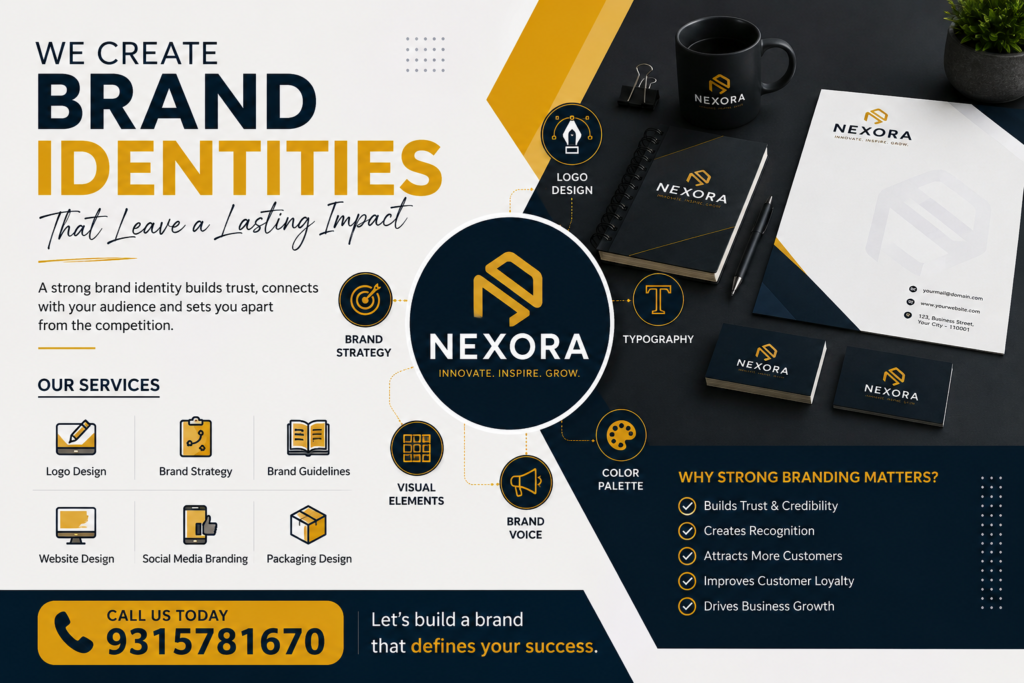
A strong brand identity is one of the most valuable investments any business can make. It influences customer perceptions, supports marketing efforts, strengthens trust, and creates long-term competitive advantages.
Professional brand identity design goes beyond logos and colors. It combines strategy, creativity, and consistency to build a memorable brand experience that resonates with customers.
Whether you are launching a new business, rebranding an existing company, or expanding into new markets, investing in expert branding services can help you achieve sustainable growth and stronger customer relationships.
If you’re ready to create a powerful and memorable brand, connect with experienced branding professionals today. For expert guidance and customized branding solutions, call 9315781670 and take the first step toward building a brand that stands out in today’s competitive marketplace{9}.
FAQs
What is brand identity design?
Brand identity design is the process of creating the visual and strategic elements that represent a business. It includes logo design, color palette, typography, brand messaging, business stationery, packaging, and marketing materials. A strong brand identity helps customers recognize and trust your business.
Why is brand identity design important for my business?
Brand identity design is important because it creates a professional image, builds customer trust, improves brand recognition, and helps your business stand out from competitors. Consistent branding also supports marketing efforts and increases customer loyalty.
What elements are included in professional brand identity design services?
Professional brand identity design services typically include:
Logo Design
Brand Color Selection
Typography Guidelines
Business Card Design
Letterhead Design
Social Media Branding
Brand Style Guide
Marketing Material Design
These elements work together to create a consistent and memorable brand image.
How long does it take to complete a brand identity design project?
The timeline depends on the project’s complexity and requirements. A basic brand identity design project may take 1–2 weeks, while a complete branding package with strategy development, logo creation, and brand guidelines can take 3–6 weeks or longer.
How can professional branding experts help grow my business?
Professional branding experts help businesses create a unique market presence through strategic brand identity design. They conduct research, develop branding strategies, design visual assets, and ensure consistency across all platforms. This helps attract more customers, improve credibility, and support long-term business growth.